.png)

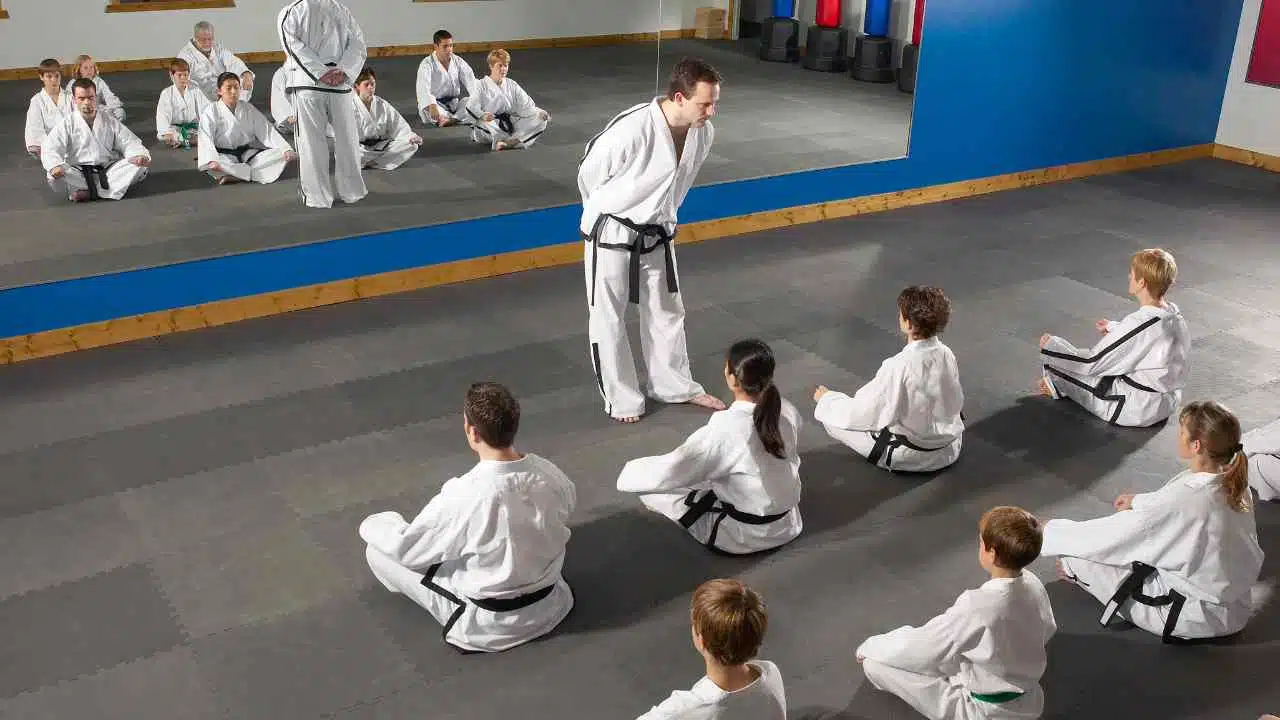
As the Olympics have grown, so has the addition of various martial arts within the games. Every four years, martial arts fans specifically seek them out to watch the action.
Let’s dive into the history of martial arts in the Olympics and discuss each one in detail. We’ll review the history of each combat sport and its legacy in the Olympics.
What Martial Arts Are In The Olympics?
There are currently seven martial arts in the Olympics. These martial arts are judo, greco-roman wrestling, freestyle wrestling, boxing, karate, taekwondo and fencing.
Olympic Boxing
A Brief history of boxing
Boxing has been practiced for thousands of years, but modern boxing began in the late 1800s. This was after the Queensberry Rules of boxing were established.
The sport of boxing would become one of the very first martial arts that was marketed to the public. Due to this marketing, boxing became one of the most popular sports in the world and is still very popular.
The history of boxing in the Olympics
Boxing was first added as an Olympic sport in 1904. During that time, there were various rule changes and weight classes implemented in the event.
For many years, headgear wasn’t used, then headgear was added, then removed again. Women’s categories were added during the 2012 Olympics.
Overview of Olympic Boxing Rules
- 3 rounds at 3 minutes each
- No headgear
- Win by: KO, TKO, & decision
- Only punches above the belt and front of the body are permitted
- The Boxer that lands the most punches wins the round
Judo
A Brief history of Judo
Jigoro Kano created Judo in the late 1800s. The martial art is a form of grappling based on technique and leverage.
These techniques were so effective that Judo quickly became popular in Japan. Kano would then send his best students around the world to teach his martial art.
This strategy paid off as Judo became an internationally practiced martial art in a very short time. Judo would later be turned into more of a sport, which Kano was initially opposed to.
The history of Judo in the Olympics
Judo was added as an official Olympic event in 1964. During that time, a lot has changed in the Judo event.
Since its addition to the Olympics, weight classes were added, dangerous techniques were banned, and women’s categories were added to the games.
Overview of Olympic Judo
- Men’s matches are 5 minutes & women’s matches are 4 minutes
- Regulation Judo Gis are required
- Win by: Ippon, 2 waza-aris, 1 hansoku penalty, or 4 shido penalties
- Golden score is implemented in a sudden death period, where the first point wins the match
Taekwondo
The history of taekwondo
Taekwondo was developed after WW2, when Japan lost control of Korea. Korean martial arts masters got together to discuss creating a national martial art.
The martial art was created to help Korea reclaim its identity after over 30 years of being under Japanese rule. Taekwondo is a heavy-kicking martial art based on various Chinese and Japanese martial arts and Taekkyon (a traditional Korean martial art).
Taekwondo was able to expand rather rapidly in its first three decades of existence. A Taekwondo world championship would first be held in the early seventies and later an Olympic event.
There are now an estimated 50 million Taekwondo practitioners worldwide.
The history of Olympic Taekwondo
Taekwondo had its trial as an Olympic sport during the 1988 Seoul Games in South Korea. Twelve years later, it would become an official Olympic sport in 2000. Since 2000, it has been one of the most watched events at the Olympics.
Overview of Olympic Taekwondo
- Match: 3 rounds, 2 minutes each
- Fighters wear Taekwondo headgear, chest protector, gloves, and foot guards
- 1 point for punches to the trunk
- 2 points for a kick to the trunk
- 3 points for a head kick
- 5 points for turning kick to the head
- 1 point for a penalty by an opponent
- Win by points, TKO, or 20-point lead
- Gold Point is implemented if the match ends in a tie