.png)
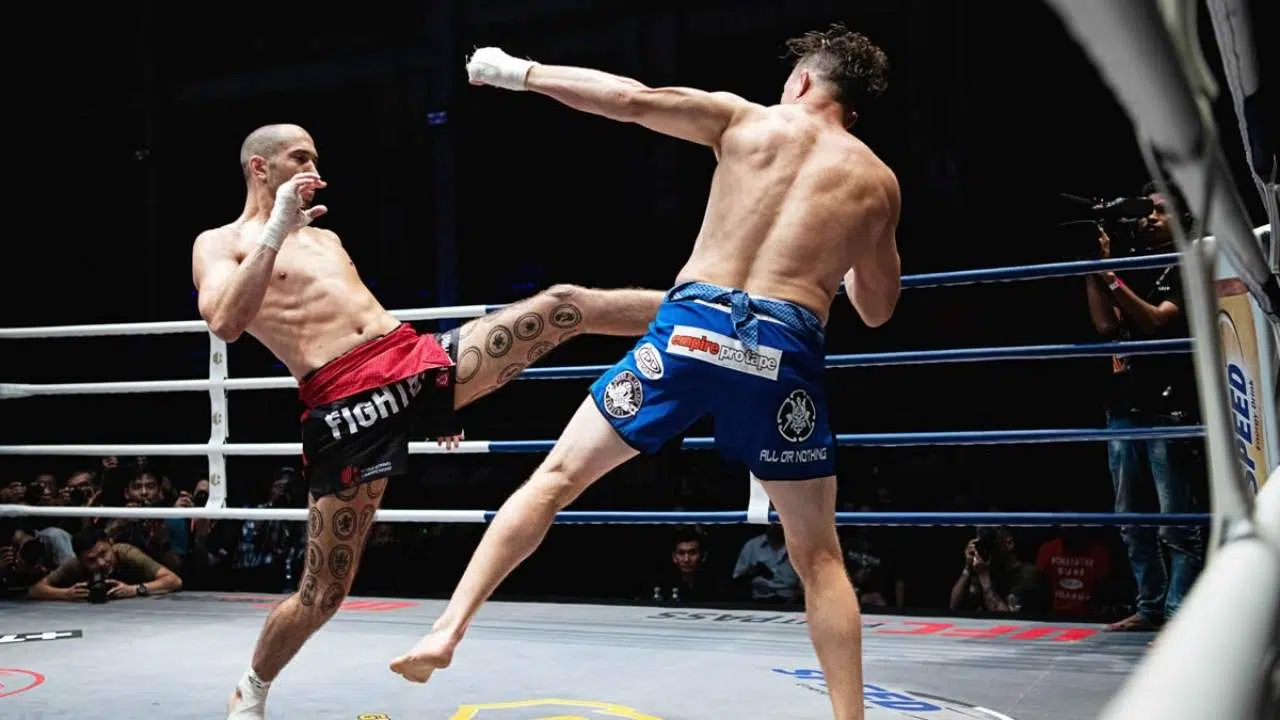
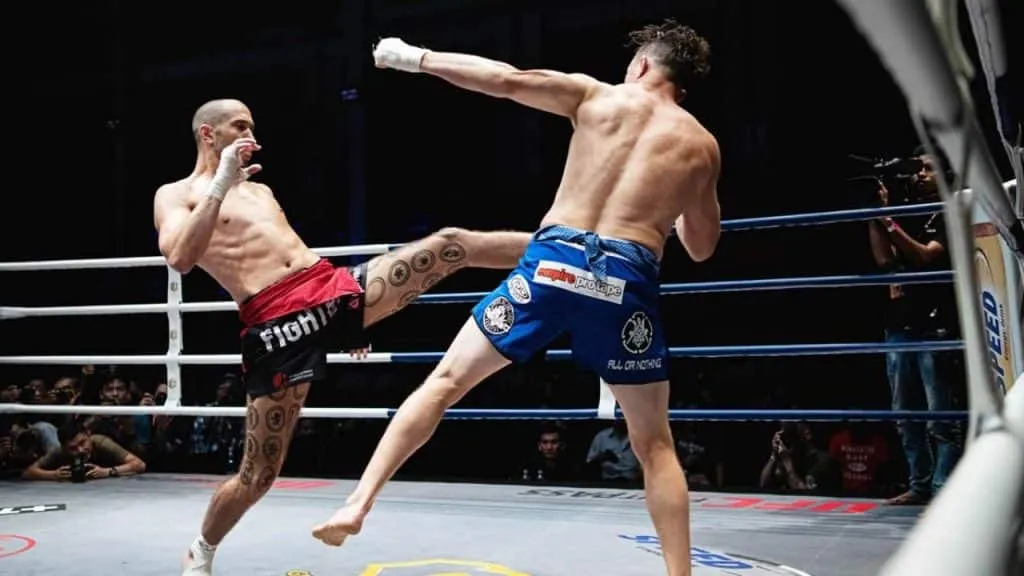
Lethwei, or Burmese boxing, is a full-contact martial art from Myanmar that utilizes both stand-up striking and clinching techniques.
Lethwei is closely related to Muay Thai as the two martial arts share many similar techniques. But, Lethwei is known for being more brutal since fighters can use headbutts as a weapon and fight bare-knuckle.
In this article, we dive into the Burmese martial art of Lethwei and explore the history, traditions, techniques and famous Lethwei fighters.
Let’s dive in.
The History Of Lethwei
The martial art Lethwei dates back to the Pyu Empire in Myanmar, which reigned from the 2nd century BC to the middle of the 11th century. Ancient Burmese armies used Lethwei during wars against neighbouring kingdoms.
During ancient times, fights were also held for entertainment and were popular within every level of society. Participation was open to any male, and matches took place in sandpits instead of rings.
Lethwei fighters fought without any protective equipment, only wrapping their hands in hemp or gauze. There were no draws, and fights continued until one of the fighters was knocked out or could no longer continue.
Like the Gracie challenge, Burmese boxing champions would enter the ring and call for open challenges.
Lethwei was modernized in the 1950s when boxer Kyar Ba Nyein formalized the rules and brought awareness of the sport around the globe.
In recent years, Lethwei has exploded in popularity due to increased exposure. Burmese boxing still has a reputation as one of the most violent combat sports globally.
Lethwei Techniques
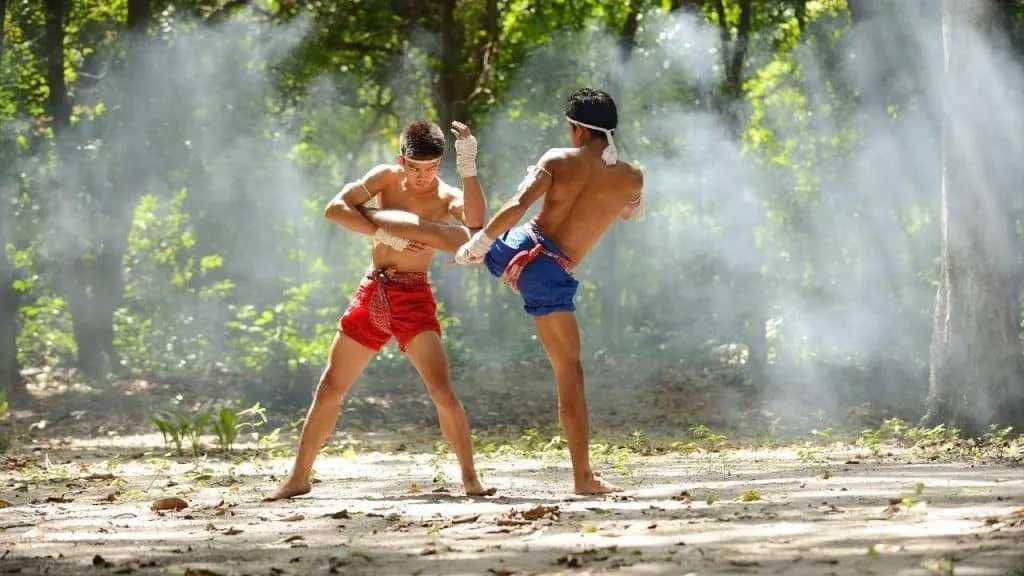
Lethwei is commonly known as the “art of nine limbs” and is considered one of the most brutal martial arts in the world. Fighters can use various techniques, including punches, kicks, knees and elbows, and headbutts are also legal.
Similar to Muay Thai, Lethwei boxers can utilize clinching techniques to control and throw their opponents.
What separates the two martial arts is the use of headbutts in Lethwei.
Headbutts are disallowed in most combat sports but are essential weapons in a Lethwei fighter’s arsenal. This is why Lethwei is also known as The Art of 9 Limbs and has a reputation for being one of the most brutal martial arts in the world.
Below is a summary of the techniques used in Lethwei:
- Headbutts
- Punches
- Elbows
- Knee strikes
- kicks
- Clinching
- Sweeps and throws
Lethwei Rules & Regulations
Every sanctioned combat sport adheres to a series of rules and regulations.
Lethwei implemented rules to ensure that fighters are safe and the audience is entertained during fights.
Below, we discuss in detail the main rules of Lethwei.
How Many Rounds Are In A Lethwei Fight?
Like Muay Thai, Lethwei bouts consist of three-minute rounds, with two minutes of rest between rounds.
Fights can either last three, four, or five rounds, depending on the Lethwei promotion. Under modern Lethwei rules, fighters can also take a two-minute rest period to compose themselves after an injury or knockout.
What Do Fighters Wear In A Lethwei Fight?
Lethwei fighters follow a strict set of attire rules that fighters must adhere to. Below are the main rules.
- Lethwei fighters must only wear tape or gauze on their hands.
- Fighters shall wear only shorts. Tops or shoes are not permitted.
- Lethwei fighters must wear a groin protector.
- The fighters must wear a gum shield.
The Burmese bare-knuckle boxing rules prohibit the use of gloves. Fighters are required to wrap their hands in front of the fight officials, who will check the legality of the wraps.
Legal Lethwei Techniques
As discussed above, Lethwei is known as the art of nine limbs. Below is a summary of the techniques that are used in Burmese Boxing.
- Headbutts
- Punches
- Knee strikes
- Elbow strikes
- Kicks
- Clinching techniques
- Sweeps and throws
Lethwei fighters use their feet, hands, knees, elbows and head in fights.
Lethwei Referee
A referee oversees Lethwei fights. In Burmese boxing, the referee has the power to:
- End the fight if he believes one fighter is significantly outclassed by his opponent.
- The referee ensures the fight is fair and in compliance with the rules.
- End the fight and refer to the doctor if a fighter is heavily wounded.
Traditional Lethwei Rules & Scoring
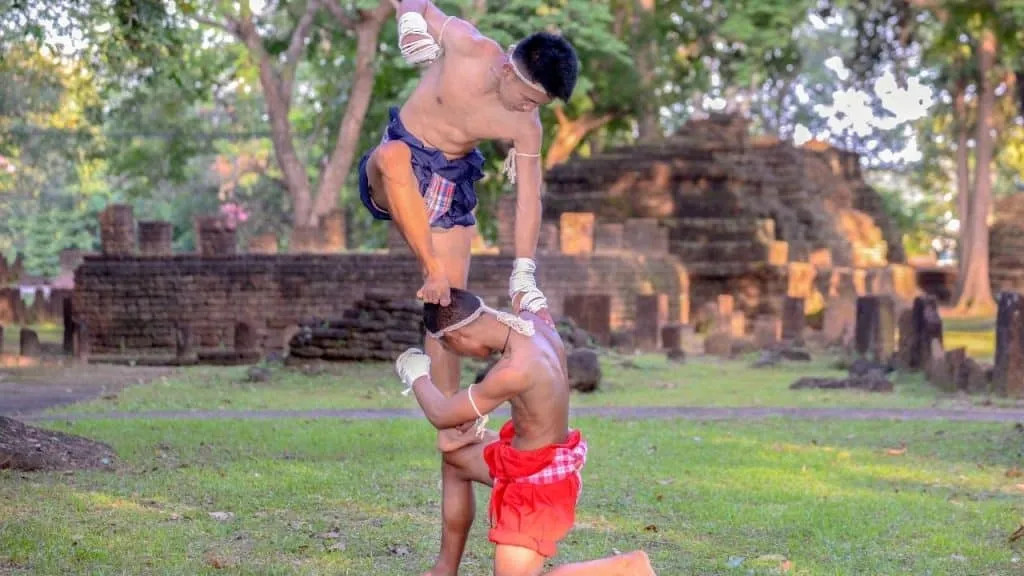
Traditional Lethwei rules, also known as yoe yar rules, are notorious for not having a scoring system. Fighters can win by knockout only in traditional Lethwei.
At the end of the fight, if there is no knockout or stoppage, the match is declared a draw. Fighters can win via TKO or KO several ways.
- A KO (knockout) is when a fighter falls to the ground, loses consciousness or if a fighter can’t stand up or defend themselves for 20 seconds.
- When three counts are performed in one round, the fight is stopped and scored as a knockout.
- When four counts are performed during the fight, the match is stopped and scored as a knockout.
- A technical knockout (TKO) occurs when a fighter has an injury, forfeits or is stopped by the doctor.
Most Lethwei organizations in Mayanmar adhere to traditional Lethwei rules, including festivals and celebrations.
Below is a summary of the most notable Lethwei organizations that use traditional rules.
- Annual Myanmar Lethwei World Championship
- Air KBZ Aung Lan Championship
- International Lethwei Federation Japan
Modern Lethwei Rules & Scoring
In 1996, modern Lethwei rules were established. Developed for the inaugural Golden Belt Championship, the new ruleset removed the two-minute injury timeout and added three judges to score the bout if needed.
The modern ruleset prevents a draw from occurring and helps declare a winner to advance in the Golden Belt Championship.
Whilst most Lethwei organizations still abide by the yoe yar ruleset, Myanmar’s first international promotion, the World Lethwei Championship, promotes the use of modern rules.
Promotions that use modern rules
- World Lethwei Championship
- Annual Golden Belt Championship
The modern Lethwei rules are still designed to encourage fighters to knock out their opponent. Judges score the fight on several areas, including aggression, damage, number of strikes per round, and the amount of blood drawn.
Lethwei fighters can be knocked down a maximum of three times per round or four times throughout the fight before the fight is ruled a knockout.
Traditional Lethwei Rules vs Modern Lethwei Rules
The main difference between traditional and modern Lethwei rules is the adoption of a scoring system.
Using a scoring system ensures a winner is always declared in Lethwei tournaments. It also helps the international growth of Lethwei as fans are used to seeing a winner declared in combat sports.
Lethwei Weight Classes
Weight classes are designed with Lethwei fighters safety in mind. In a mismatched fight, the smaller opponent is more likely to get injured.
Honestly, Lethwei is dangerous enough already without matching smaller fighters against larger opponents.
Weight classes in Lethwei range from light flyweight to cruiserweight. The table below discusses each weight class’s upper weight limits and genders of the weight class.
Weight ClassLimit lbsLimit KGLimit StoneGenderLight Flyweight105487.6FemaleFlyweight112518Male / FemaleBantamweight119548.5Male / FemaleFeatherweight126579Male / FemaleLightweight132609.5Male / FemaleLight Welterweight14063.510Male / FemaleWelterweight1486710.5MaleLight Middleweight1577111.1MaleMiddleweight1657511.8MaleSuper Middleweight1747912.4MaleCruiserweight1838313MaleLethwei Weight Classes
Traditional Gesture & Pre Fight Ritual
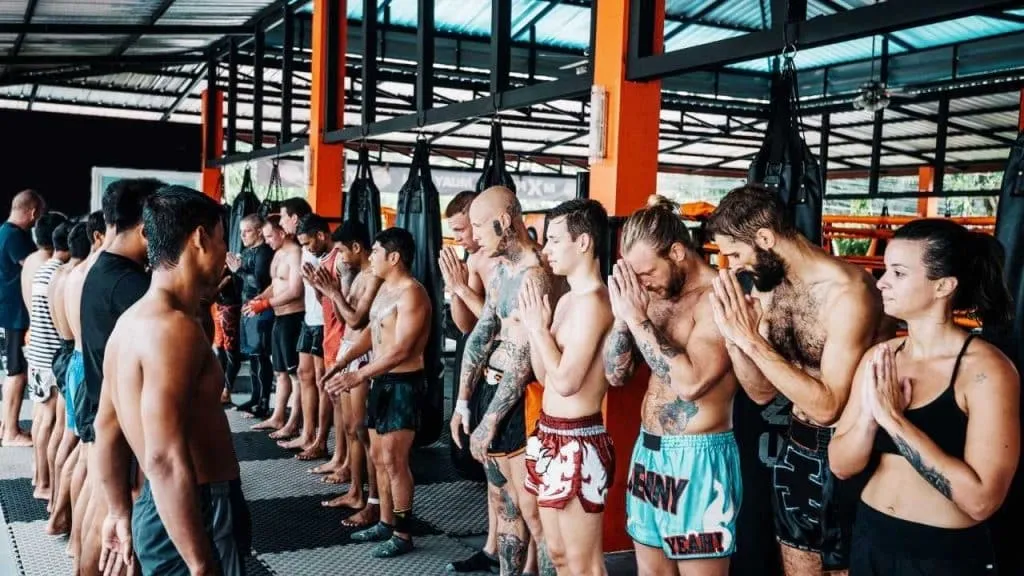
Like the Wai Kru Ram Muay in Muay Thai, Lethwei fighters take part in a pre-fight tradition called the lekkha moun and Lethwei yay.
Below we will discuss both the lekkha moun and Lethwei yay in further detail.
Lekkha moun
The lekkha moun is a traditional gesture performed by fighters to challenge their opponent. The gesture is performed at the beginning of the Lethwei yay and can also be done when fighting to taunt their opponent to be more aggressive.
The lekkha moun is done by clapping three times with the right palm to the triangle-shaped hole formed while bending the left arm. The clapping hand must be in the form of a cup, while the left hand is placed under the right armpit.
The lekkha moun is inspired by the birds of prey, as they flap their wings when hunting.
Lethwei yay
The Lethwei yay is similar to the Ram Muay in Muay Thai.
The Lethwei yay is a fight dance performed before the fight to showcase the fighter’s skills and as a victory dance after the battle. The traditional fight dance is performed as well as the lekkha moun.
Before the modernization of Lethwei, the pre-fight dance was commonly referred to as han yay. Like Muay Thai, the Lethwei yay is performed alongside a traditional orchestra.
Lethwei Training
Lethwei training is similar to what you would expect in a Muay Thai gym in Thailand.
Fighters rely heavily on the basics. Training consists of various drills, including running, shadow boxing, bag-work, sparring and conditioning.
Most Lethwei gyms are often basic, offering no-frills but still providing all the tools you need to thrive as a fighter.